
You spray your favourite perfume in the morning, and by lunchtime it’s gone. Sound familiar? Many people blame the perfume, but often the real problem is the choice itself. Some fragrances are simply built to fade fast, while others stay with you all day. In this guide you will learn how to choose a long-lasting perfume, which notes and concentrations last longest, and how to test longevity before you buy.
The good news: once you understand how a perfume is built, you can predict how long it will last just by reading its notes.
Table of Contents
Why some perfumes disappear so fast
A perfume is a mix of fragrance materials dissolved in alcohol. As soon as you spray it, the alcohol evaporates and the fragrance materials start to evaporate too, each at its own speed. Light, small molecules, such as those in citrus oils, evaporate within minutes. Heavier molecules, such as those in woods, resins and musks, evaporate slowly and can stay on your skin for many hours.
That is why a long-lasting perfume is not about price or brand. It mainly depends on two things: which ingredients a perfume contains, and how concentrated it is.
Top, heart and base notes explained
Perfumers describe a fragrance in three layers, often called the fragrance pyramid. Each layer appears at a different moment after you spray. You can read more about this structure on the Wikipedia page on perfume notes.

- Top notes: the first impression. Usually citrus, light fruits and fresh herbs. They last from a few minutes up to about half an hour.
- Heart notes: the core of the perfume. Often flowers, spices and green notes. They appear after the top notes fade and last for a few hours.
- Base notes: the foundation. Woods, resins, vanilla, amber and musk. They develop slowly and can last six hours or more.
When you want a scent that lasts, the base notes matter most. A perfume with a strong base will still be noticeable long after the top notes have disappeared.
How to choose a long-lasting perfume in 7 steps
1. Look for strong base notes
Before you buy, check the note list on the brand’s website or on a database such as Fragrantica. These notes are known for lasting a long time:
- Woods: sandalwood, cedar, vetiver and oud.
- Resins and balsams: amber, benzoin, labdanum and incense.
- Sweet notes: vanilla and tonka bean.
- Musk and patchouli.
If the list is mostly citrus, sea notes and light flowers, the perfume will usually fade faster, even if it smells great at first.
2. Choose a higher concentration
The same perfume often comes in different strengths. An eau de parfum contains more fragrance oil than an eau de toilette, so it usually lasts longer and smells richer. A parfum or extrait de parfum is even more concentrated. Want to know exactly how they differ? Read our comparison of eau de parfum vs eau de toilette.
3. Pick the right fragrance family
Some fragrance families are naturally more long-lasting than others. Amber, woody and gourmand scents tend to stay longest, because they are built around heavy base notes. Fresh, citrus and aquatic scents are lighter by nature. That does not make them a bad choice, but you should expect to reapply them during the day.
4. Consider your skin
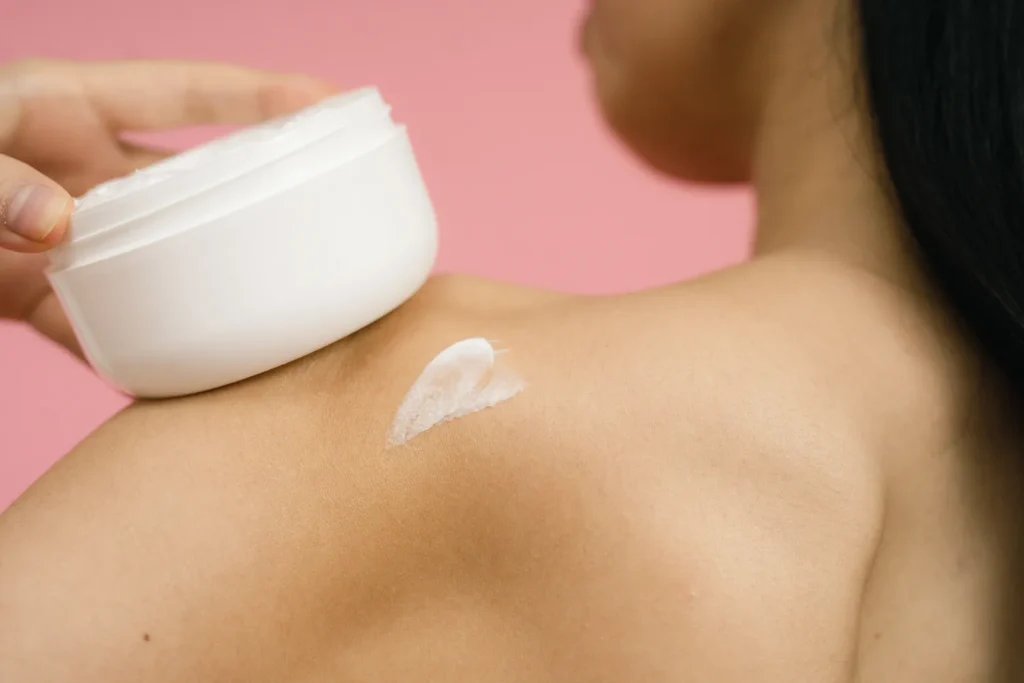
Perfume lasts longer on moisturised skin, because dry skin absorbs the fragrance oils and lets them evaporate faster. If your skin is dry, a richer scent or a higher concentration is often the better choice. Applying an unscented lotion before you spray also helps.
5. Think about the season and climate
Heat makes perfume evaporate faster and project more strongly, while cold weather slows it down. A light scent can disappear within an hour on a hot summer day, and a heavy amber scent can feel overwhelming in the same heat. For year-round longevity, many people choose a lighter eau de parfum in summer and a warmer, richer scent in winter.
6. Test longevity on your skin, not on paper
Paper strips show you how a perfume smells, but not how long it lasts on you. To test longevity properly:
- Spray one perfume on your wrist or inner elbow and don’t rub.
- Smell it every hour or two and write down when you can no longer smell it without putting your nose to your skin.
- Repeat the test on at least two different days, because weather and your skin can change the result.
This is also the best way to find your signature scent. Read our step-by-step guide on how to find your signature scent.
7. Don’t confuse longevity with your own nose
After a while, your nose gets used to a smell and stops noticing it. This is called olfactory fatigue. Many people think their perfume has disappeared, while the people around them can still smell it. Before you decide a perfume doesn’t last, ask a friend or check your scarf or collar later in the day.
Quick tips to make any perfume last longer
- Apply perfume right after a shower, on clean and moisturised skin.
- Spray on pulse points such as the wrists, neck and behind the ears.
- Spray a little on your clothes, but avoid silk and light-coloured fabrics, which can stain.
- Store your bottles in a cool, dark place, away from sunlight and bathroom humidity.
Frequently asked questions
Which perfume notes last the longest?
Base notes last the longest. Woods such as sandalwood and vetiver, resins such as amber and incense, vanilla, tonka bean, musk and patchouli can often be smelled six hours or more after you spray.
Does a more expensive perfume last longer?
Not necessarily. Whether something is a long-lasting perfume depends on the ingredients and the concentration, not on the price. An affordable eau de parfum with strong base notes can easily last longer than an expensive, citrus-heavy eau de toilette.
Why can’t I smell my perfume after an hour?
Often it’s still there, but your nose has stopped noticing it because of olfactory fatigue. If others can’t smell it either, the perfume probably has light notes or a low concentration.
Conclusion
Choosing a long-lasting perfume is easier than it seems. Look for strong base notes such as woods, amber, vanilla and musk, choose an eau de parfum or higher concentration, and test the scent on your own skin for a full day before you buy. Combine that with moisturised skin and smart application, and your fragrance will stay with you from morning until evening.
Leave a Reply